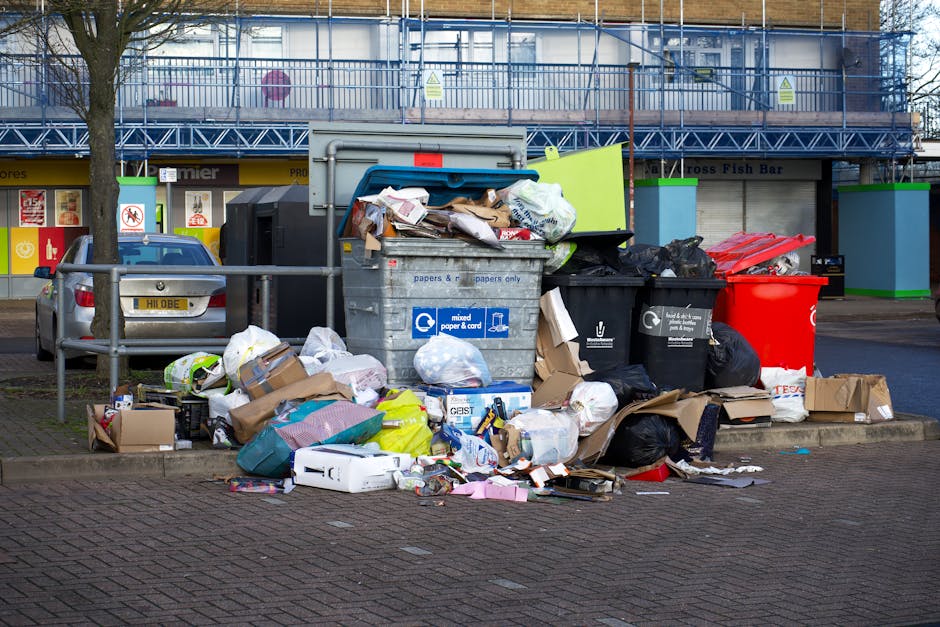
Avoid hidden rubbish charges in Hounslow council rules
Posted on 13/06/2026
If you are trying to avoid hidden rubbish charges in Hounslow council rules, you are probably dealing with one of those jobs that looks simple at first and then suddenly sprouts extra costs, awkward restrictions, and a bit of admin nobody asked for. A clear skip quote can help, but only if you know what to check before you book. In Hounslow, the real trap is often not the headline price. It is the add-ons, access issues, permit assumptions, and the small-print differences between council expectations and private waste services.
This guide walks you through the practical side of it: what hidden charges usually look like, how council rules can affect your plans, what to ask before you pay, and how to compare options without getting caught out. Nothing fluffy. Just the sort of detail that saves you a headache later on.
To be fair, rubbish and waste removal is one of those jobs where people only want it to work once. You want the garden cleared, the refurb waste gone, or the office junk removed. Done. No surprise invoice turning up like an uninvited guest.
Why Avoid hidden rubbish charges in Hounslow council rules Matters
Hidden rubbish charges are not just annoying. They can change the entire cost of a clearance job. In Hounslow, that matters because local streets, parking, access, loading bays, and collection expectations can all affect what a provider needs to do. A quote that looks tidy on screen can become messy once the vehicle arrives and the team realises there is nowhere safe to stop, the load is heavier than expected, or the waste type is different from what was declared.
There is also the council side of things. Council rules around waste disposal, nuisance, fly-tipping, and loading can influence how rubbish should be handled, where it can be left, and what the customer is responsible for. If you ignore those points, the cheapest option can become the most expensive very quickly. And yes, that is the sort of lesson people usually learn the hard way.
Why does this happen so often? Because waste services are rarely sold in a way that explains the whole picture. The advertised rate may cover collection only, while extras can appear for:
- extra weight or overfilled bins
- restricted access or long carry distances
- parking or permit-related issues
- specific waste types such as soil, plasterboard, or mixed builders' waste
- waiting time beyond the agreed slot
- late changes to the volume booked
Understanding those moving parts gives you leverage. You can ask better questions, compare like for like, and avoid the classic "Oh, that wasn't included" moment.
How Avoid hidden rubbish charges in Hounslow council rules Works
The simplest way to think about it is this: a waste job usually has three layers of cost. First, there is the base service price. Second, there are job-specific conditions such as the size of the load, access, and labour. Third, there are compliance issues, which may be driven by local rules, site restrictions, or the way the waste must be handled.
In practice, a provider will usually price a job by looking at the type of rubbish, how much there is, where it is located, and how easy it is to remove. A small garage clearance in a driveway is one thing. A third-floor flat with no lift and a narrow stairwell is another matter entirely. Same rubbish, very different job.
Hounslow-specific concerns often include practical urban details: parking, timed access, busy residential roads, controlled areas, and the need to avoid obstruction. If your collection vehicle cannot stop safely or legally, costs can rise. Sometimes that is fair and unavoidable. What you want to avoid is paying for it without knowing in advance.
A good provider should be able to explain the price structure in plain English. If they cannot, that is already a clue. The quote should tell you what is included, what is not, and what would trigger an extra fee. If you are also comparing related services, it helps to look at how the company handles other property jobs too; for example, some customers review broader support such as cleaning services or pressure washing services when they are planning a larger clear-out or post-work tidy-up.
Key Benefits and Practical Advantages
The upside of handling rubbish removal carefully is not just saving money, although that is the obvious one. You also reduce stress, avoid delays, and make sure the job is done without accidental non-compliance. That matters whether you are a homeowner, landlord, tradesperson, or business owner.
Here are the main practical advantages:
- Clearer budgeting - you know the likely total before the work starts.
- Fewer surprises - the job is less likely to pick up extras on the day.
- Better timing - the collection can be scheduled with fewer hold-ups.
- Lower risk - you reduce the chance of fly-tipping or improper disposal issues.
- Less back-and-forth - one clear quote is easier than three rounds of chasing.
There is another benefit people overlook: confidence. When you know the rules, you are less likely to feel pressured into agreeing to a vague price. You can slow the conversation down and ask the right questions. That alone can save a fair bit.
A small but useful point: hidden charges often appear where the customer assumes a "normal" job. But rubbish is never just rubbish. A sofa, a bag of plaster, old fencing, broken tiles, and general household waste may all fall into different pricing or handling categories. Once you see that, the pricing starts making more sense.
Who This Is For and When It Makes Sense
This guidance is useful for anyone arranging waste removal in Hounslow, but a few groups tend to benefit most:
- Homeowners clearing lofts, garages, gardens, or old furniture
- Landlords and letting agents dealing with end-of-tenancy rubbish
- Tradespeople managing builders' waste after a small renovation
- Small businesses clearing office, shop, or stockroom waste
- People moving house who need a fast, tidy clearance
It also makes sense if you are comparing council-side disposal options against private collection. Sometimes the council route is suitable. Sometimes it is not. That depends on the type of waste, how quickly you need it gone, and what you can physically move yourself. If you have bulky items, access issues, or mixed waste, the decision may be less about headline cost and more about certainty.
Let's face it, the cheapest route is not always the cheapest route. If a "cheap" job needs extra trips, a permit, or last-minute labour, the total can creep up. Sometimes quietly. That is the hidden-rubbish-charge problem in a nutshell.
Step-by-Step Guidance
Here is a practical way to keep control of the process from the start.
1. List exactly what needs removing
Do not just say "a bit of rubbish." Break it down. Old mattresses, broken wardrobes, garden cuttings, tiles, bags of rubble, and cardboard are priced and handled differently. If you are unsure, take a few photos in daylight. A quick phone photo by the back gate can tell a provider far more than a vague description.
2. Estimate the volume honestly
Most hidden charges start here. If you underestimate the amount, the quote may only cover part of the load. Be realistic about how much space the waste takes up once it is gathered together. A few loose items can turn into a full van surprisingly fast.
3. Check access and parking
In Hounslow, access matters. Ask yourself: can a vehicle stop nearby? Is there street parking? Is there a narrow driveway, steps, or a rear alley? If there are restrictions, say so upfront. It is much better to mention the awkward bit early than to explain it while the crew is already on site.
4. Ask what the quote actually includes
This is where you need to be a little nosy, in the best possible way. Ask whether the price includes labour, loading, disposal, waiting time, and VAT if applicable. Ask what happens if the load is heavier than expected. Ask whether there are fees for certain waste types. A decent provider will not mind. A vague one might start dancing around the question.
5. Check council-related restrictions or local expectations
If your waste will be left out for collection, stored temporarily, or moved through shared access, make sure you understand any relevant council expectations or property rules. For residents, that can mean keeping pathways clear and avoiding nuisance to neighbours. For businesses, it may mean making sure waste is handled in a way that does not affect customers, staff, or adjoining properties.
6. Confirm the booking in writing
A short written confirmation can prevent misunderstandings. It does not need to be fancy. It simply needs to state the agreed waste type, approximate volume, date, price basis, and any known extras. Even a straightforward email is better than a memory that fades by Tuesday afternoon.
7. Keep an eye on the collection day
When the team arrives, make sure the waste you described is the waste they see. If extra items have appeared, flag them before the loading starts. Small surprises can snowball into extra charges quickly. One forgotten pile of bricks can change the quote more than people expect.
Practical summary: the best protection against hidden rubbish charges is not luck. It is clarity: clear waste description, clear access information, clear price breakdown, and clear written confirmation.
Expert Tips for Better Results
After enough clearances, a few patterns become very obvious. The best outcomes usually come from the customers who ask simple, specific questions. Not because they are difficult, but because they are prepared.
Try these tips:
- Take photos from multiple angles. One photo rarely tells the whole story. A wide shot and a close-up are both useful.
- Separate waste types where possible. Mixed waste can cost more than sorted waste. It is not always practical, but even a bit of sorting helps.
- Measure awkward items. Wardrobes, desks, and boards are often underestimated. A tape measure saves guesswork.
- Ask about heavier materials early. Soil, bricks, tiles, and plasterboard often need special handling or pricing.
- Check who is doing the loading. Some services include loading labour, others do not. That detail matters more than people think.
One small reality of rubbish jobs: if you do not mention the awkward item, it tends to be the item that changes the price. Funny how that works.
Also, pay attention to timing. A collection arranged for peak traffic hours in a busier part of Hounslow can become more difficult than expected. That might affect access or waiting time. It is not dramatic, just one of those everyday London things that gets in the way a little.

Common Mistakes to Avoid
Most hidden charges are predictable once you know where they come from. These are the mistakes that show up most often:
- Describing the waste too vaguely - "general rubbish" is not enough for an accurate quote.
- Guessing the volume - an optimistic estimate can lead to a top-up charge later.
- Forgetting access details - stairs, distance from the kerb, or parking restrictions all matter.
- Assuming every item is priced the same - it is not.
- Not confirming the price basis - if the quote is per load, per item, or per weight, make sure you know which.
- Leaving waste outside without checking local rules - this can create complaints or enforcement issues.
A less obvious mistake is focusing only on price and ignoring reliability. A provider who turns up on time, explains the job properly, and invoices clearly can be better value than a cheaper option that leaves you chasing answers. Been there, seen that, not worth it.
Tools, Resources and Recommendations
You do not need specialist software to manage a rubbish removal job well. A few simple tools are enough.
- Phone camera - take clear photos of the waste and access route.
- Notes app - record item lists, measurements, and questions before you call.
- Tape measure - useful for furniture, boards, and anything awkwardly shaped.
- Simple checklist - keep track of what is going, what stays, and what might need special handling.
If you are organising a broader property refresh, it can also help to compare related services so you are not paying separately for everything without a plan. For example, if waste removal is part of a deeper clean or exterior spruce-up, it may be worth reviewing options such as carpet cleaning services or pressure washing services alongside the clearance itself.
One recommendation that sounds boring but pays off: keep all quote messages in one place. Email, WhatsApp, text, whatever the provider uses. If a question comes up later, you want the written record handy instead of rummaging through your phone at 7:40 on a wet morning.
Law, Compliance, Standards, or Best Practice
Waste handling in the UK is not just a customer-service issue; it has a compliance side too. You do not need to become a legal expert, but you should understand the basics. In broad terms, waste should be collected, transported, and disposed of responsibly. Fly-tipping, unsafe dumping, and poor handling can create risks for residents, businesses, and the environment.
For customers, the practical lesson is simple: use a service that can explain where your rubbish is going and how it will be handled. If the answer is vague, be cautious. If the provider seems unable to describe their process in plain English, that is not a great sign.
Best practice usually includes:
- accurate description of the waste before booking
- clear pricing terms with any extra charges explained
- safe loading and transport arrangements
- proper disposal through legitimate routes
- respect for local access, parking, and nuisance considerations
If you are a landlord, managing agent, or business owner, this matters even more because the waste may be tied to tenancy turnover, site work, or commercial clearances. A tidy process protects your budget and your reputation. And truth be told, those two often travel together.
Options, Methods, or Comparison Table
When you want to keep rubbish removal costs under control, you usually have a few options. The right one depends on volume, urgency, and how much lifting you are willing to do yourself.
| Option | Best for | Possible downside | Hidden charge risk |
|---|---|---|---|
| Council collection or council-led disposal route | Smaller jobs, residents with time to plan | May be less flexible on timing or item type | Medium, if you misread what is accepted or how items must be presented |
| Private rubbish removal | Fast clearances, mixed waste, bulky items | Pricing varies widely | High if access, weight, or waste type is not explained clearly |
| Skip hire | Ongoing DIY or renovation waste | Space and permit considerations | Medium to high if size, placement, or overfilling is not understood |
| Self-haul to a disposal site | People with suitable vehicle access and time | Labour, fuel, and site rules are on you | Low on provider charges, but higher if you underestimate time or disposal requirements |
This table is not about choosing the cheapest line item. It is about choosing the route with the fewest surprises for your situation. If you have a driveway and a small load, one answer makes sense. If you have a third-floor flat and a mixed bag of waste, another answer makes much more sense.
Case Study or Real-World Example
Imagine a typical Hounslow terrace house after a long-overdue clear-out. The owner has a broken wardrobe, several bags of old clothes, two chipped shelves, a few garden bags, and a pile of flat-pack packaging from recent furniture deliveries. On the phone, they say "just a small amount of rubbish." Sounds harmless enough.
But on arrival, the waste is spread across the back garden, the side passage is narrow, and the vehicle cannot park right outside because of the road layout. The collection team now has longer carry distances, more labour, and a load that is slightly larger than expected. If none of that was mentioned during booking, a surcharge becomes likely.
Now compare that with a better-prepared booking. The customer sends photos, lists the item types, mentions the narrow side access, and asks whether the price includes loading and disposal. The provider can quote properly, choose the right vehicle, and set expectations before anyone turns up. Same job. Less friction. Fewer surprises. Better result.
That is the real lesson here: most hidden charges are not hidden at all once the job is described properly. They only feel hidden because the first conversation was too vague.
Practical Checklist
Use this before confirming any rubbish removal job in Hounslow:
- Have I listed every item that needs removing?
- Have I checked whether any of the waste needs special handling?
- Have I sent clear photos if the job is not straightforward?
- Have I explained parking, access, stairs, or distance from the road?
- Do I know whether the quote includes labour, loading, and disposal?
- Have I asked about extra fees for weight, time, or overfilled loads?
- Have I checked if the collection method fits local rules and property conditions?
- Do I have the agreement in writing?
- Have I compared at least two options if the job is flexible?
- Am I comfortable that the final price is likely to stay put?
Quick takeaway: if any answer above is "not really", pause and clarify before booking. A few extra minutes now can save a fairly awkward invoice later.
Conclusion
Avoiding hidden rubbish charges in Hounslow council rules is mostly about preparation, not luck. When you describe the waste clearly, check access, ask what is included, and confirm the terms in writing, you reduce the chance of surprise costs and make the whole job smoother.
The best approach is simple: compare properly, ask direct questions, and do not let a rushed quote steer you into paying more than you should. Whether you are clearing a flat, a garden, a rental property, or a workplace, a little care at the start usually pays back in time, money, and peace of mind. That is the honest version.
If you are planning a clearance and want the numbers to make sense from the start, take the time to get a clear, itemised quote and ask the awkward questions early. It is a small effort, but it makes a real difference.
Get a free quote today and see how much you can save.